Solopreneur Playbook

AI for Solopreneurs: 10 Jobs, One Subscription, Zero Hires

TL;DR: AI for solopreneurs works best when you match the right model to each job — Claude for writing, GPT-4o for images and code, Gemini for documents. This playbook gives solo founders the exact workflow, model choice, and copy-paste prompt for all 10 core business jobs, saving 14+ hours per week without adding a single hire.

27M+ solo businesses in the US·84% plan to use AI·14+ hrs/week saved

Why solopreneurs need a model router, not another tool

There are now over 27 million nonemployer firms in the United States alone, according to the U.S. Small Business Administration Office of Advocacy. That number grew faster in 2022–2024 than at any point in the last decade. These are not side-hustles — a growing cohort of one-person businesses is crossing $1M ARR, a phenomenon documented by Stripe Atlas and covered in the Harvard Business Review.

The bottleneck for every solopreneur is time. The median solo founder works 50+ hours per week across content creation, sales, customer support, operations, and finance — jobs that used to require a small team. AI can compress that workload, but only if you use the right model for each task.

A McKinsey State of AI report found that SMB adoption of generative AI grew from 20% to 40% between 2023 and 2024 — and the gap between adopters and non-adopters is widening. The solopreneurs who win in the next five years will be those who treat AI as a leverage multiplier, not a novelty.

"Leverage is the solopreneur's only competitive edge. AI is the cheapest leverage ever invented."

— Justin Welsh, Solopreneur & Creator Economy Newsletter Author

The problem is not access to AI — it is access to the right AI per task. ChatGPT-only users are leaving significant capability on the table. Claude consistently outperforms GPT-4o on nuanced writing. Gemini 1.5 Pro handles 1M-token documents that other models simply cannot. Routing tasks to the best model is the single highest-leverage habit a solopreneur can build. AI for solopreneurs shares core principles with AI for small businesses — but the workflows are tighter and more personal.

What does "AI for solopreneurs" actually look like?

AI for solopreneurs is not the same as enterprise AI. Enterprise deployments involve months of procurement, IT integration, and change management. For a solopreneur, it means logging into one app in the morning and delegating the first draft of every cognitive task to the right model before noon.

The key distinction from generic "use AI" advice: task-to-model specificity. Every model has measurable strengths. Using Claude for a blog draft and GPT-4o mini for customer support replies — rather than one model for everything — is the difference between mediocre AI output and output you can ship directly.

The AI writing assistant workflows used by content-focused solopreneurs are a good starting point. But a solo founder running a full business needs coverage across 10 distinct job types. That is what the playbook below addresses.

The 10 jobs of a solopreneur

Each job has a best model, a copy-paste prompt, and documented time savings. This is the operational core of AI for solopreneurs.

1. Blog draft2.5 hr

Claude Sonnet

Write a 1,200-word post on {topic} for {ICP}; my POV is {angle}; cite 3 stats; open with a hook that challenges the conventional wisdom.

2. Customer support replies45 min/day

GPT-4o mini

Reply to this ticket in my tone; resolve the issue or escalate with a clear next step; keep it under 120 words: {ticket_text}

3. Sales email sequence3 hr

Claude Sonnet

Write a 4-email cold sequence targeting {ICP}; primary objection is {objection}; CTA is a 20-min call; subject lines A/B variants included.

4. Bookkeeping summary1.5 hr/month

Gemini 1.5 Pro

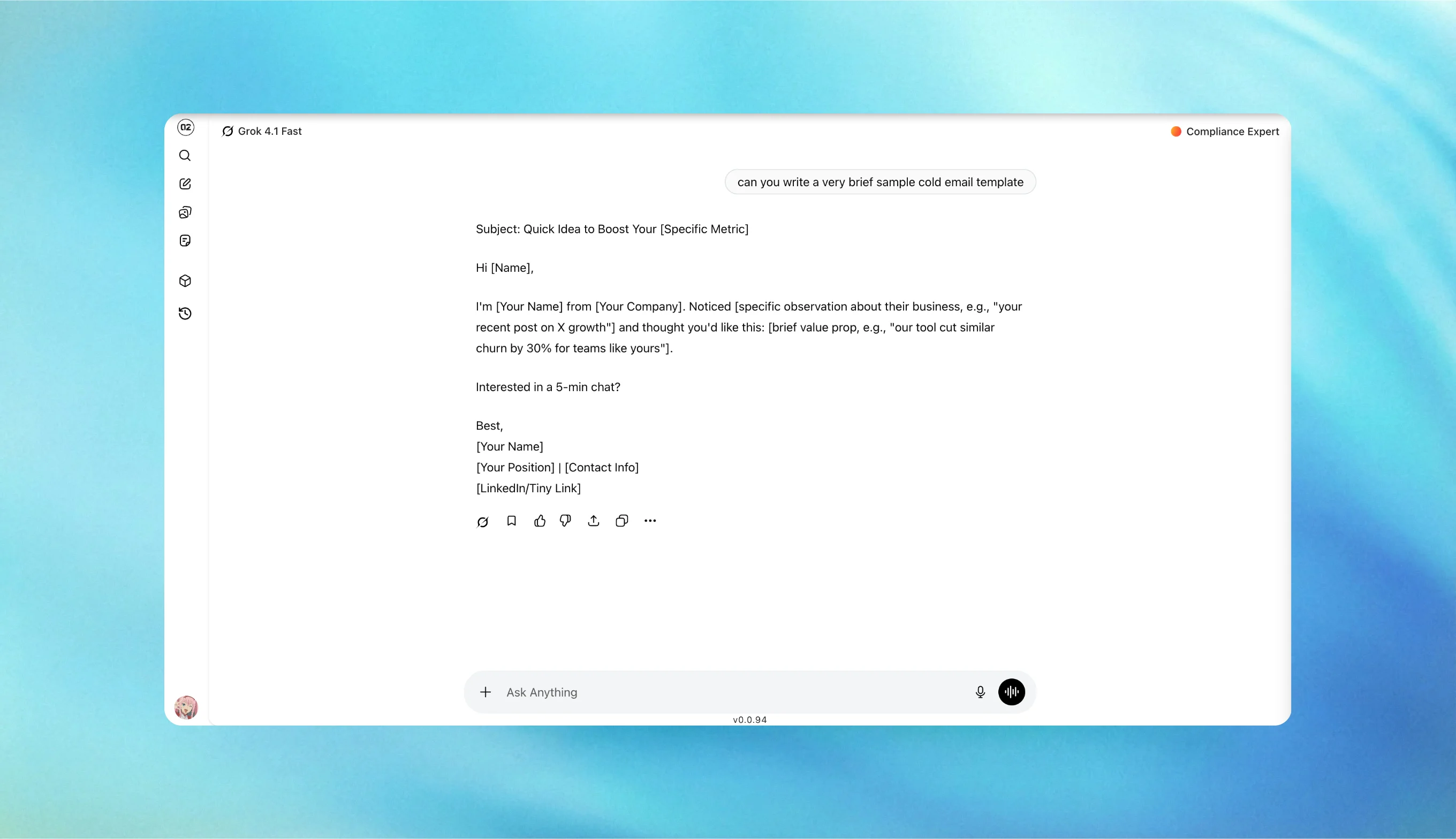
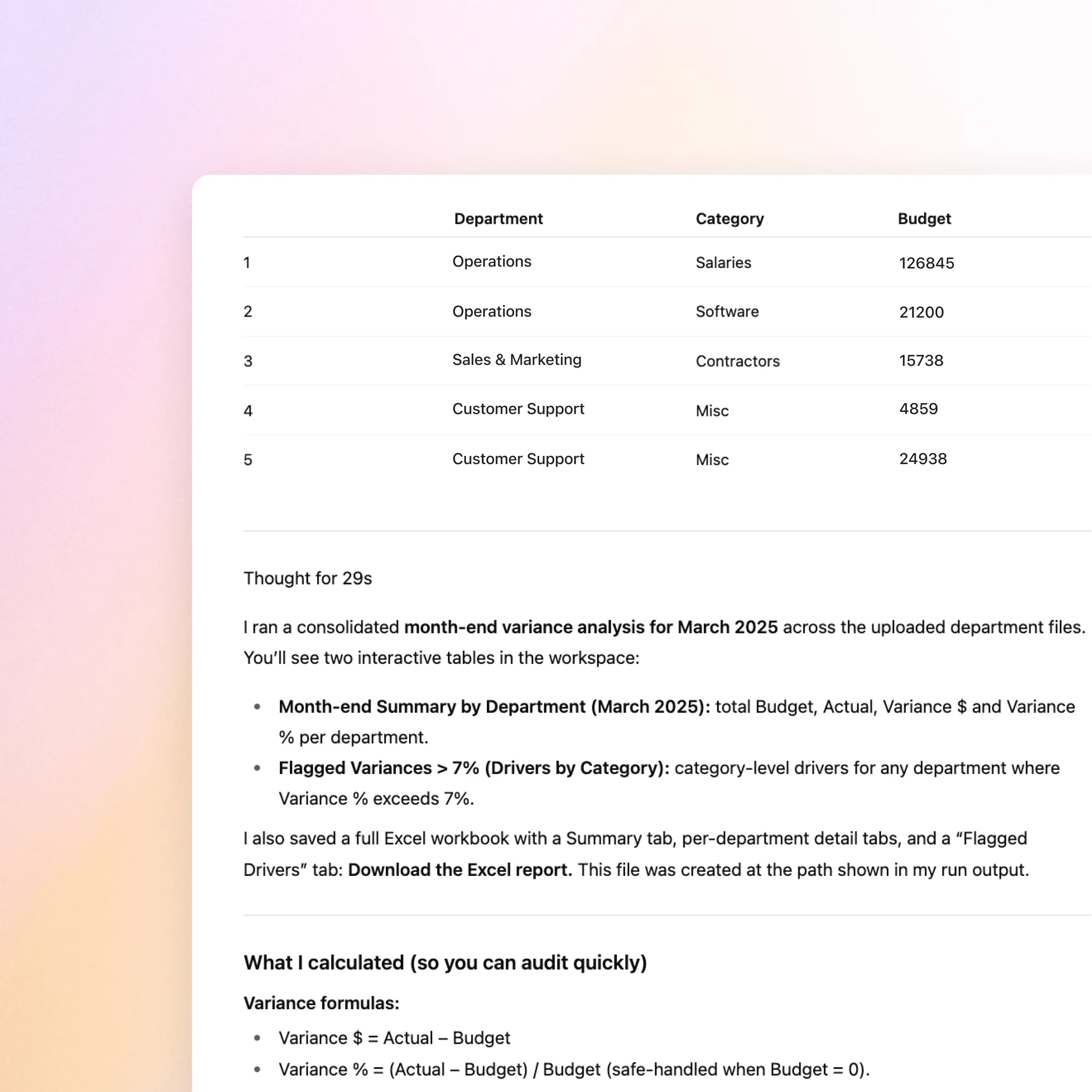
Summarize this Stripe CSV for {month}; flag anomalies over 20% variance; tag each line by category (marketing, ops, SaaS); output a table.

5. Design brief40 min

GPT-4o

Draft a landing-page hero brief: target audience is {audience}; desired emotion is {emotion}; supply 3 visual reference descriptors and 2 headline options.

6. Social posts (10-pack)2 hr

Claude Sonnet

Turn this blog post into 10 LinkedIn posts; vary the hook style (question / stat / story / provocation / how-to); keep each under 200 words.

7. Product spec → code scaffold1.5 hr

Claude / GPT-4o

Generate an Express route for {feature}; include Zod validation, error handling, and Jest unit tests. Repo context: {stack_description}.

8. Image / hero art1 hr

DALL-E / Imagen via ZeroTwo

Warm-gradient hero image; solopreneur at a minimal desk; golden-hour light; style: editorial photography; aspect ratio 16:9; no text overlay.

9. Meeting-note synthesis30 min/call

Claude Sonnet

From this transcript extract: (1) decisions made, (2) owners and due dates, (3) open questions. Output as a bullet list. Transcript: {transcript}

10. Investor / update email1 hr

Claude Opus

Monthly update to 5 angels; metrics are {metrics}; biggest win is {win}; biggest risk is {risk}; tone = honest and measured, not salesy.

A one-week workflow for a solo founder

The full 10-workflow playbook, structured as a week-in-the-life. Every row below maps to a numbered job in the grid above.

JobBest Model (in ZeroTwo)Copy-paste prompt skeletonAvg time saved
1. Blog draftClaude SonnetWrite a 1,200-word post on {topic} for {ICP}; my POV is {angle}; cite 3 stats; open with a hook that challenges the conventional wisdom.2.5 hr
2. Customer support repliesGPT-4o miniReply to this ticket in my tone; resolve the issue or escalate with a clear next step; keep it under 120 words: {ticket_text}45 min/day
3. Sales email sequenceClaude SonnetWrite a 4-email cold sequence targeting {ICP}; primary objection is {objection}; CTA is a 20-min call; subject lines A/B variants included.3 hr
4. Bookkeeping summaryGemini 1.5 ProSummarize this Stripe CSV for {month}; flag anomalies over 20% variance; tag each line by category (marketing, ops, SaaS); output a table.1.5 hr/month
5. Design briefGPT-4oDraft a landing-page hero brief: target audience is {audience}; desired emotion is {emotion}; supply 3 visual reference descriptors and 2 headline options.40 min
6. Social posts (10-pack)Claude SonnetTurn this blog post into 10 LinkedIn posts; vary the hook style (question / stat / story / provocation / how-to); keep each under 200 words.2 hr
7. Product spec → code scaffoldClaude / GPT-4oGenerate an Express route for {feature}; include Zod validation, error handling, and Jest unit tests. Repo context: {stack_description}.1.5 hr
8. Image / hero artDALL-E / Imagen via ZeroTwoWarm-gradient hero image; solopreneur at a minimal desk; golden-hour light; style: editorial photography; aspect ratio 16:9; no text overlay.1 hr
9. Meeting-note synthesisClaude SonnetFrom this transcript extract: (1) decisions made, (2) owners and due dates, (3) open questions. Output as a bullet list. Transcript: {transcript}30 min/call
10. Investor / update emailClaude OpusMonthly update to 5 angels; metrics are {metrics}; biggest win is {win}; biggest risk is {risk}; tone = honest and measured, not salesy.1 hr
Total weekly time savings14+ hours

Week-in-the-life

Monday

Content

Blog draft (#1) + Social 10-pack (#6)

Tuesday

Sales

Email sequence (#3) + Design brief (#5)

Wednesday

Product

Code scaffold (#7) + Meeting synthesis (#9)

Thursday

Support

Support replies (#2) + Image assets (#8)

Friday

Finance

Bookkeeping summary (#4) + Investor update (#10)

The quickest way to run this playbook

Log into ZeroTwo and pick the right model per job. No tab-switching, no separate subscriptions — one login, every model in the playbook.

How much should a solopreneur spend on AI?

The typical solopreneur tool stack — a writing tool, a code assistant, an image generator, a customer support automation, and a scheduling tool — costs $120–$200/month when bought separately. And each tool only covers one job.

The math for a unified model-router is straightforward. At a conservative freelance rate of $50/hour, 14 hours saved per week equals $700/week or $2,800/month in recovered time. A $20–$30 subscription delivering that return has a monthly ROI above 9,000%.

More importantly: the time savings compound. A solopreneur who recaptures 14 hours per week can reinvest that time in product, in sales, or in rest. The cumulative advantage over a competitor who is not using AI grows every quarter.

For context, solo founders and indie hackers building in public should also see the AI for startups playbook — it covers the same model-routing logic at slightly higher team scale.

What does the research say about solo founders and AI?

A Stanford and GitHub study on AI coding assistants found a 55% productivity gain for developers using AI. For a solopreneur who codes their own product, that is the equivalent of gaining an extra day per week without hiring.

The McKinsey State of AI found that businesses using AI in their core workflows reported 20–30% reduction in operational costs. For a solopreneur, operational cost is mostly time — which is the one resource you cannot buy more of.

The pattern across all the research is consistent: the productivity gains from AI are front-loaded for those who build disciplined workflows — which is exactly what the 10-job playbook above is designed to do.

Frequently asked questions

Key takeaways

  • Match each job to its strongest model — Claude for writing, GPT-4o for multimodal, Gemini for documents, Claude Opus for high-stakes outputs.
  • The 10-workflow playbook saves 14+ hours per week, covering content, sales, ops, support, and finance.
  • Copy-paste prompt skeletons outperform generic prompts by forcing specificity: ICP, angle, and output constraints.
  • A multi-model subscription is more cost-effective than stacking 5–7 single-purpose SaaS tools.
  • AI does not replace the solopreneur's judgment — it amplifies output speed while keeping quality control with the founder.

Related resources

Written by ZeroTwo EditorialPublished Updated

Ship more as a team of one

Start free — one login, every model in the playbook. No credit card required.

Start free →